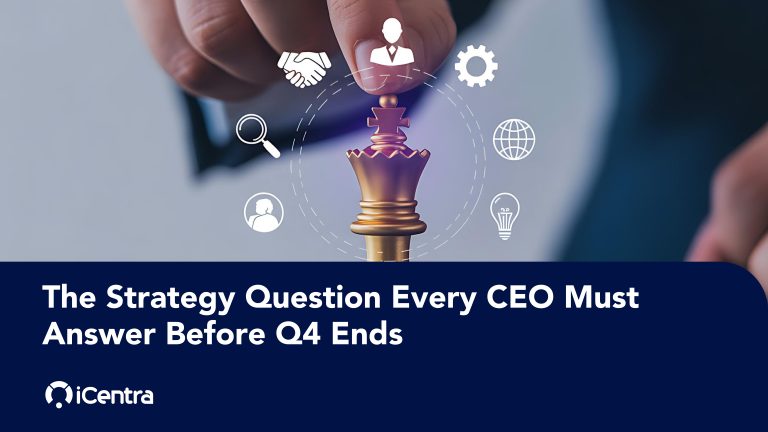
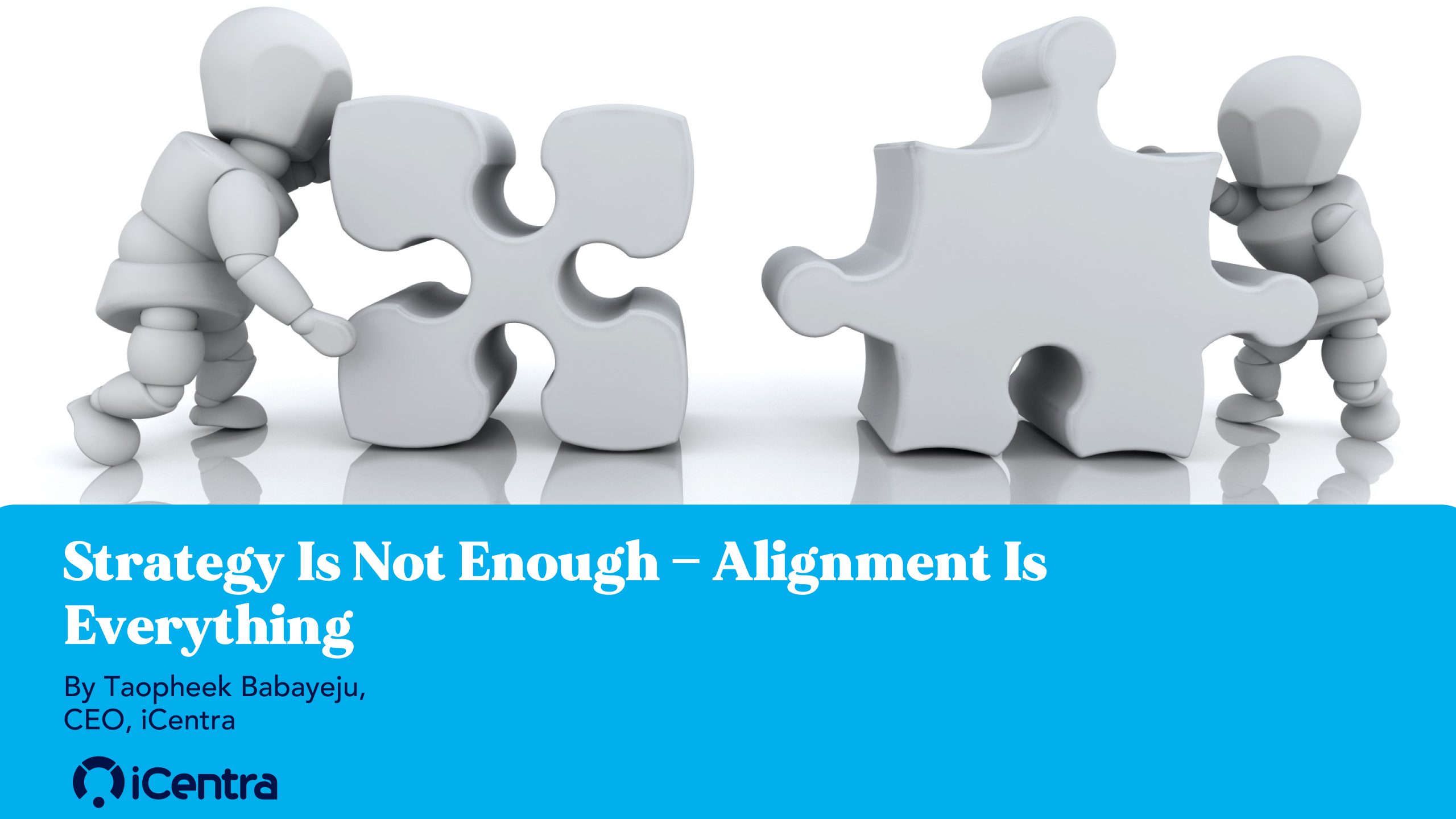
“Strategy is a plan. Alignment is the infrastructure that makes the plan executable.”
Last month’s conversation on AI governance and organizational capability revealed a pattern that I have encountered consistently across client engagements over the past decade: organizations are treating the wrong problem as the primary problem. They are investing in better strategies when what they need is better alignment, and the difference between these two investments determines whether strategy becomes organizational reality or remains on a board slide.
Every strategy conversation I have with executive teams ends at the same wall. The strategy is sound. The leadership is capable. The resources are allocated. And yet the results do not come. The question I ask at that moment is never “what is wrong with the strategy?” It is always: “is this organization aligned to execute the strategy it has approved?”
In almost every case, the honest answer is no. Not because the organization is incompetent. Not because the leadership team is not serious about performance. But because the portfolio of investments, the governance of delivery, the development of people capability, and the measurement of strategic performance are not aligned to each other, and none of them are continuously aligned to the strategic intent that was approved.
That is the execution gap. It is not a strategy problem. It is an alignment problem. And it requires an architectural solution.
Why the Execution Gap Is Structural, Not Operational
The most common mistake executive teams make when they encounter an execution gap is to treat it as an operational failure. They invest in project management capability, they improve reporting cadences, they hold more performance reviews. Some of this produces marginal improvement. None of it closes the gap sustainably.
The execution gap is structural because it emerges from the way organizations are built, not the way they are managed. When strategy is developed by one group, portfolio decisions are made by another, delivery governance is run by a third, and people capability development lives in a fourth.
Each function can be individually competent and collectively incapable of executing a coherent strategic intent.
This is the architectural reality that most organizational design conversations avoid. The question is not how well each function performs in isolation. The question is whether the four dimensions of organizational execution are aligned to each other and to the strategy that has been approved.
iCentra’s work on this problem across enterprise clients in financial services, public sector, energy, and professional services has produced a consistent finding: in organizations that consistently execute their strategies, these four dimensions are not just individually capable, they are structurally aligned. In organizations that consistently underperform their strategic ambitions, the misalignment between these dimensions is the primary cause.
The 4P Alignment Architecture™
The architectural solution to the execution gap is what iCentra calls the 4P Alignment Architecture™: a four-dimension governance framework that connects Portfolio, Project, Product, and People in a continuous alignment loop.
The framework did not emerge from theory. It emerged from the diagnostic pattern we observe in every execution gap engagement: the same four dimensions are always misaligned, and the sequence in which the misalignment manifests is always the same. Portfolio decisions are made without clear connection to execution governance. Delivery governance operates without systematic value measurement. Value measurement does not drive capability investment. Capability investment does not feedback to portfolio decision-making. The loop is broken in at least one place, usually several.
The first dimension is Portfolio. Portfolio alignment means that the organization’s investment decisions, what it funds, at what scale, with what governance attached, are directly and continuously connected to the strategic intent that has been approved. This sounds self-evident. In practice, it is rare. Most organizations have investment processes that were designed for a different strategic period and have not been redesigned to reflect current strategic priorities. The portfolio is executing the last strategy, not the current one.
The second dimension is Project. Project alignment means that the governance architecture for delivery, how decisions are made during execution, how trade-offs are resolved, how performance is measured against strategic intent, not just against schedule and budget, is directly connected to portfolio logic.
This is where most execution governance fails: projects are governed for completion, not for strategic value. A project that delivers on time and on budget but does not contribute to the strategic intent it was funded to advance is not a success. It is a well-managed failure.
The third dimension is Product. Product alignment in the iCentra framework refers to value measurement; whether the products, services, or capabilities that execution is generating are being measured against the strategic outcomes they were designed to produce. In most organizations, value measurement is either absent or disconnected from the execution governance that would allow measurement findings to influence delivery decisions. The feedback loop that should connect output to outcome to strategic adjustment does not exist.
The fourth dimension is People. People alignment means that capability development is treated as a strategic investment aligned to current and future strategic requirements, not as a training budget allocated to learning preferences. In organizations with strong 4P alignment, the capability profile of the workforce is continuously mapped against the strategic capability requirements the organization will need to execute its next phase of ambition. In organizations without it, capability investment lags strategic requirements by two to three years on average.
The Loop That Makes Strategy Executable
The 4P Alignment Architecture™ is not four separate programmes. It is one continuous loop. Portfolio decisions drive delivery governance. Delivery governance connects to value measurement. Value measurement shapes capability investment. Capability investment informs portfolio strategy for the next cycle. When the loop is closed and aligned to strategic intent, strategy stops being a document and starts being an operating system.
This is the distinction that matters most for executive teams preparing their organizations for 2027. The question is not whether the strategy is correct. In most cases, the strategy is more correct than the organization’s ability to execute it warrants. The question is whether the four dimensions of organizational execution are aligned to deliver the strategy that has been approved.
The organizations that will compound their performance from 2027 onwards are those that act on this distinction now. Not those that will refine their strategies in the next planning cycle. Those that will rebuild their alignment architecture in this one.
What the Alignment Audit Reveals
iCentra’s entry point for 4P Alignment Architecture™ work is what we call the Alignment Audit: a structured diagnostic of whether the four dimensions of organizational execution are aligned to each other and to the strategic intent that has been approved.
The audit is not a lengthy assessment process. It is a four-session diagnostic designed for senior leadership teams, typically completed in two weeks. What it produces is not a report. It is a precision map of where the alignment breaks down and what the architectural consequence of each break is on organizational performance.
The most important finding from every Alignment Audit we have conducted is not the misalignment itself. Leadership teams usually know where the gaps are, even if they have not named them as alignment gaps. The most important finding is the sequence: which break in the loop is upstream of the others, and what resolves first as a result of addressing it.
This sequencing intelligence is what makes the 4P Alignment Architecture™ a practical governance instrument rather than a conceptual framework. It tells executive teams not just where the problems are but in what order they need to be addressed, which is the only piece of information that determines whether an alignment intervention produces lasting improvement or short-term compliance.
The Q4 2026 Decision
October sits at a specific moment in the organizational calendar. Q4 is when leadership teams face the greatest pressure to perform against the strategic commitments they made at the beginning of the year. It is also the window in which the decisions that will determine 2027 performance are either made or deferred.
The deferral cost of alignment work is not neutral. Every quarter that an organization operates with a broken alignment loop is a quarter in which the portfolio is executing the wrong priorities at the wrong scale with the wrong governance. The compounding effect of this misalignment is not linear, it accelerates. An organization that has been executing a misaligned portfolio for two years does not simply need two years of good execution to recover. It needs architectural reconstruction plus recovery time.
iCentra’s position is direct: the organizations that will close the execution gap before 2027 are those that treat the alignment audit as a Q4 decision, not a Q1 one. The organizations that defer it will enter 2027 executing the same broken loop, with one more year of compounded misalignment to unwind.
Entry Points for October
For organizations at different stages of readiness, iCentra offers these entry points this month.
The Strategy & Execution Advisory engagement is for leadership teams that have identified the execution gap and are ready for an alignment diagnostic and architectural intervention. iCentra brings the 4P Alignment Architecture™ directly to the leadership team and produces the precision alignment map within two weeks.
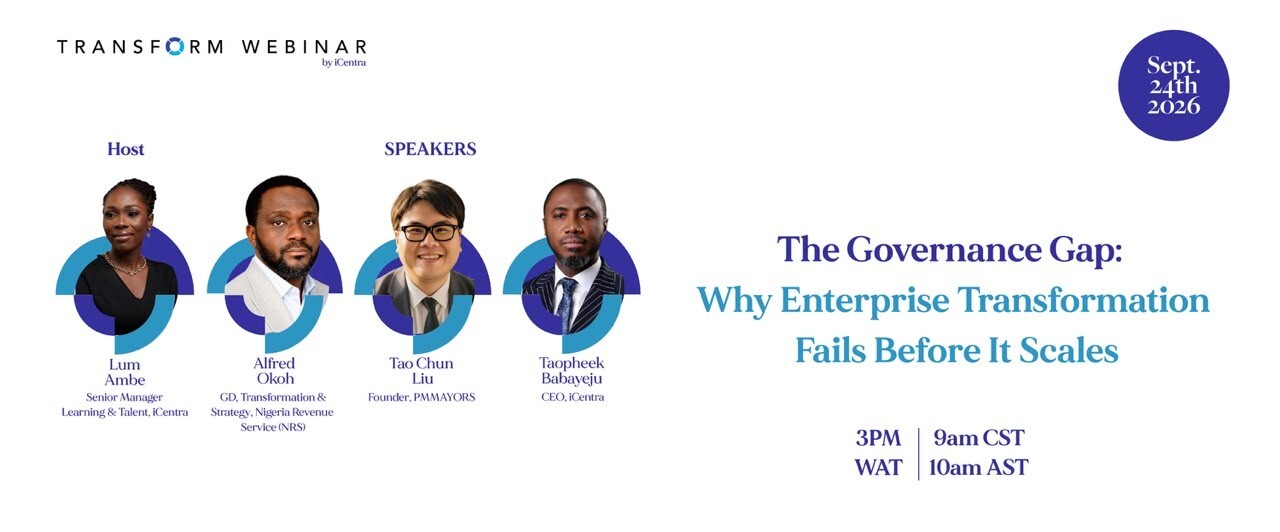
The Transform Webinar, “Strategy into Action: Closing the Execution Gap in Organizations,” on October 29th is for leadership teams and strategy professionals who want to understand the framework before committing to an engagement. 90 minutes. CEO-moderated. Three panel speakers from organizations with live alignment work underway.
The alignment gap between strategy and execution is the most common and most consequential organizational failure pattern iCentra encounters. It is also the most solvable, but only if it is addressed as an architectural problem, not a management one.
Strategy is not enough. Alignment is everything.
Experience Transformation. Sustain Performance.
Taopheek Babayeju is the CEO of iCentra, a global enterprise transformation and business solutions company. iCentra works with organizations across Africa, the Middle East, and international markets to build the alignment architecture, execution capability, and transformation infrastructure that produce sustained organizational performance.