Why Execution Discipline — Not Strategy — Determines Transformation Success
Across boardrooms and executive retreats, strategy is rarely the problem.
Leadership teams invest significant time crafting bold ambitions, digital roadmaps, and transformation agendas designed to future-proof their organizations. Strategic intent is clear. Funding is approved. Portfolios are launched.
Yet, despite this effort, many organizations struggle to convert strategic ambition into sustained value.
The failure is often misdiagnosed as poor execution.
The deeper issue is structural.
Most organizations are still operating with a delivery architecture designed for stability, while attempting to compete in environments defined by constant change.
This tension exposes a fundamental limitation in how the Project Management Office (PMO) has traditionally been conceived.
To thrive in today’s operating reality, the PMO must evolve from a project oversight function into a Value Management Office – an enterprise capability that connects governance, execution, and measurable impact.
The Illusion of Delivery Success
Many PMOs can demonstrate:
- improved reporting standards,
- standardized methodologies,
- consistent milestone tracking,
- enhanced project visibility.
Yet organizations often find themselves asking:
“If projects were delivered successfully, why has performance not materially improved?”
The answer lies in a simple but powerful distinction:
Delivery activity is not the same as value creation.
A traditional PMO measures whether work is completed.
A Value Management Office measures whether strategic value is realized.
This is not semantics. It is an operating model shift.
From Project Governance to Portfolio Governance
Traditional PMO governance focuses on individual initiatives:
- Are timelines met?
- Are budgets controlled?
- Are risks monitored?
These are necessary controls but they operate at the wrong altitude for strategic impact.
The modern enterprise requires portfolio governance:
- Are we investing in the right initiatives?
- How do initiatives collectively advance strategic priorities?
- Where must capital and leadership attention be reallocated as conditions evolve?
Portfolio governance elevates the PMO from delivery compliance to strategic alignment.
It transforms governance from constraint into enabler.
- Benefits Realization: The Missing KPI
Transformation efforts often succeed in delivering outputs while failing to secure outcomes.
Benefits realization – the structured tracking of value beyond project closure, remains underdeveloped in many organizations.
Without explicit ownership of value realization:
- projects close successfully,
- dashboards turn green,
- and strategic intent quietly erodes.
A Value Management Office institutionalizes benefits realization by:
- defining value at portfolio inception,
- embedding outcome metrics into governance cycles,
- continuously reassessing initiative relevance.
In doing so, it shifts the conversation from “Did we deliver?” to “Did we create value?”
3. Leadership Alignment as Execution Infrastructure
Execution discipline is rarely a methodology problem.
It is frequently a leadership alignment challenge.
Competing priorities, fragmented decision rights, and misaligned incentives undermine transformation momentum.
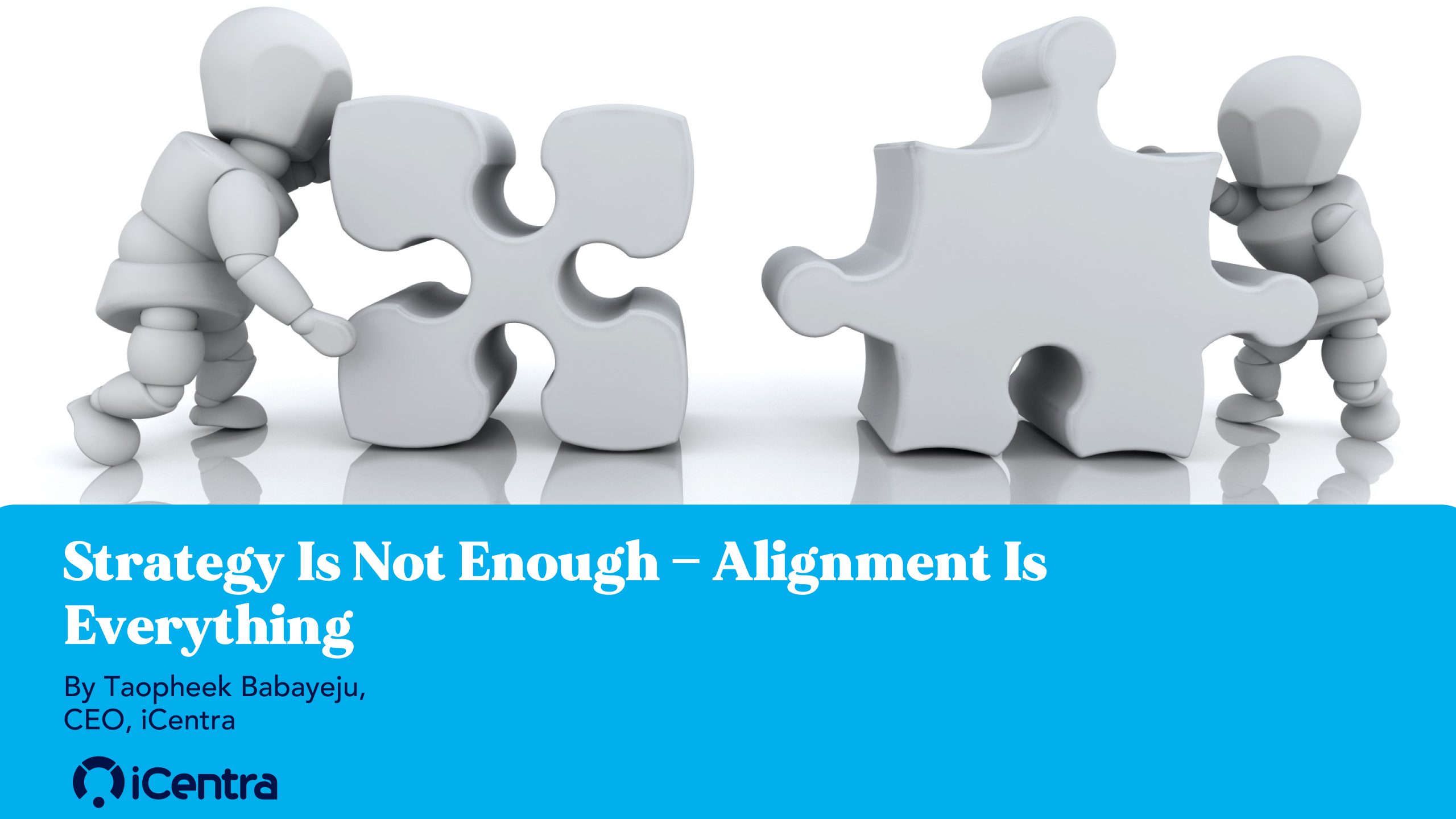
A Strategic PMO operating as a Value Management Office serves as alignment infrastructure by:
- clarifying strategic priorities,
- orchestrating portfolio trade-offs,
- ensuring transparency in decision-making.
Alignment reduces organizational friction enabling agility without sacrificing governance.
The Role of the Strategic PMO in Continuous Transformation
Organizations today no longer experience change as episodic disruption.
They operate in environments where technological evolution, regulatory complexity, market shifts, and stakeholder expectations continuously reshape the landscape.
In this context, transformation cannot be managed as a time-bound initiative.
It must become an organizational capability.
The Strategic PMO functioning as a Value Management Office, becomes central to this capability by:
- sustaining alignment between strategy and execution,
- embedding governance into innovation,
- ensuring workforce and leadership coherence,
- reinforcing value realization as a discipline.
It is not merely an administrative layer.
It is execution architecture.
The Operating Model Imperative
Repositioning the PMO as a Value Management Office requires more than structural adjustment.
It requires:
- redefining performance metrics,
- integrating portfolio governance into executive decision cycles,
- elevating benefits realization to strategic priority,
- cultivating leadership alignment as a continuous discipline.
This evolution transforms the PMO from a support function into a strategic capability.
A Question for Enterprise Leaders
The most important question is no longer:
“How mature is our PMO?”
It is:
“Does our governance architecture ensure that execution continuously creates measurable value?”
Organizations that answer this question honestly and act decisively, move beyond episodic transformation toward sustained performance.
In a world defined by complexity and constant change, execution discipline is no longer operational detail. It is strategic infrastructure.
And the Strategic PMO, reimagined as a Value Management Office, is the mechanism through which continuous transformation becomes possible.