Why Organizations Measure Completion Instead of Impact
Transformation initiatives often conclude with a familiar outcome: projects delivered on time, dashboards showing green indicators, and teams declaring success.
Yet months later, leadership struggles to identify tangible performance improvement.
This disconnect reflects a critical gap.
Organizations frequently measure delivery success but fail to measure value realization.
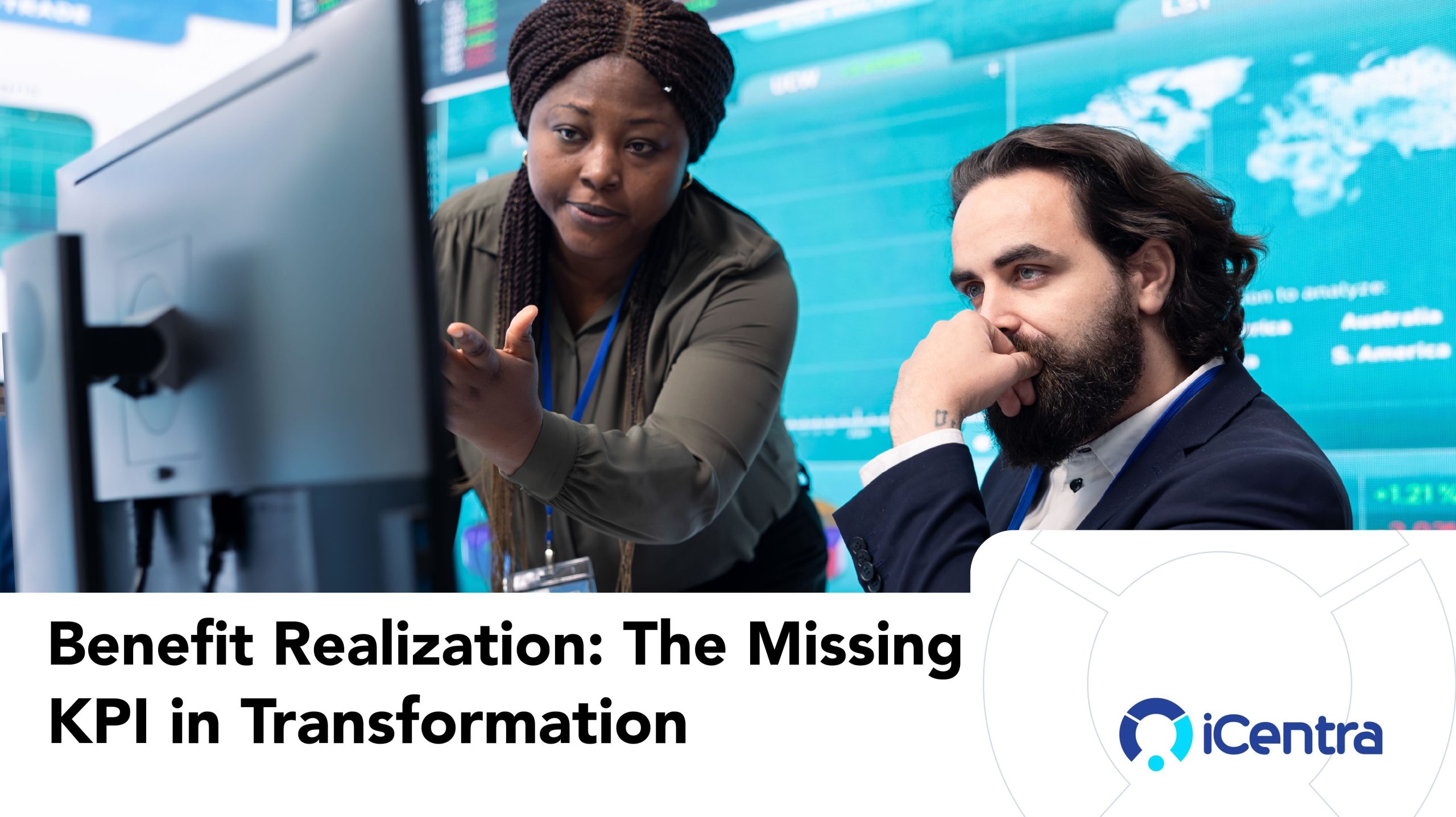
Benefits realization requires more than defining expected outcomes at the start of a project. It demands continuous governance mechanisms that track whether initiatives actually produce measurable organizational impact over time.
Without this discipline:
- projects become ends in themselves,
- strategic intent fades into operational activity,
- transformation becomes synonymous with motion rather than progress.
A Value Management Office addresses this by embedding benefits tracking into portfolio governance cycles, ensuring that value remains visible long after delivery milestones are completed.
The question shifts from:
“Did we finish?”
to
“Did it change our performance?”
In Continuous Transformation, benefits realization is not an optional practice, it is the central metric of success.
Here is a Proof Story from CBN -Client Experience.